
5 Things to do with a Metronome
For some, the metronome is the bane of their existence, something to be groaned at. But not me, for me it's one of the most useful tools I have for a good practice session. These are my top 5 creative uses to get the best out of that little ticking box.
For some, the metronome is the bane of their existence, something to be groaned at. But not me, for me it's one of the most useful tools I have for a good practice session. And particularly after attending a series of masterclasses at Waikato University where Richard Aaron from Juilliard was one of the visiting professors, he really reignited my creativity when it came to getting the best use out of that little ticking box.
Here is my top 5 ways to make the most out of your metronome.
5. A classic method of use, it's an oldie but a goodie. Setting the beat to a specific tempo that is required, so you know you are playing the piece at the right speed. In the case that the correct tempo cannot yet be achieved - set a slower tempo and gradually working it up. Gets the job done, simple as that.
4. Set the metronome to click on the smallest denomination. For most things semi-quavers should do the trick - but if the piece has demi-semi quavers for example you'd want to set it for that. This method forces you to subdivide accurately. It really helps suss out tricky rhythms, and to place notes well, for example with dotted rhythms, and even when there are a lot of longer notes , it's easy to get complacent and a bit elastic when it comes to changing notes - the metronome won't let you get away with it.
Having an internal pulse is super important and especially in orchestral playing, this is a great way to practice so it sets you up with solid subdivisions when it comes to following the conductor and keeping the section tight.
It's worth mentioning that this way of practice can be a little off putting at first, especiallly at quicker tempos (the metronome can turn into some sort of machine gun sound effect) but when you work up to it gradually, the subdivisions become more of a 'feeling' than hearing each and every click.
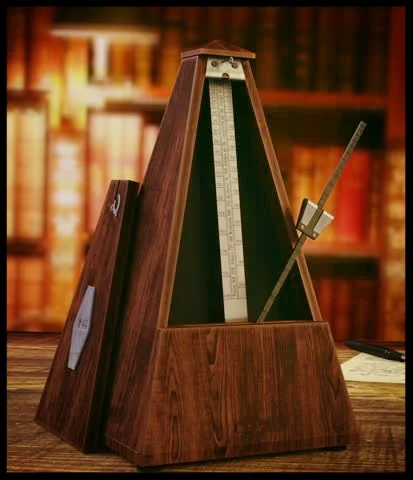
3. The metronome beats only on the first beat of the phrase. This will mean usually 4 bars, but depending on the music you could get away with 2, 3 or more. This is sort of an extension on number 4. It really tests your internal pulse and rhythm of the piece. Obviously the longer the phrases are the harder it is to land at the same time as the metronome. It helps identify phrases that might be dragging, or rushing. It also allows for some more musical shaping than the previous method, while still keeping a steady pulse. But be warned it sounds a lot easier than it is.
2. Set the metronome to alternative rhythms. I've been experimenting with this method since learning about finding and playing different jazz rhythmic feels. The main idea is to set some sort of irregular click going, something different to the main pulse and even sub-divisions, for example off beat quavers, a swung (tripletised) rhythm, a dotted rhythm or even something as simple as beat 2 and 4. In the first instance setting any alternative click to a piece will help solidify the rhythm, if for no other reason than it messes a bit with your head and you have to really concentrate on placing notes correctly.
More interesting though, is if you look really closely at the piece, where do the phrases lie, what is the rhythmic shape, what is the style and feel of the piece. Then choose a setting that fits into one of those elements.
I'll explain; for example if a piece makes a feature of triplets, setting a swung click will feed into those triplets and everything else will have to be carefully placed and fit into that same feel, unifying the whole theme, rather than the triplets sticking out.
Another example; a piece has a straight rhythm nothing unusual, but there are several semiquaver runs that start on the second half of the beat, stick on an off beat click, the runs will then start on a click, and everything else will move along with that same sort of syncopated feel.
Now these are just examples, and not everything will really work, but try some different things and you might find that some alternative rhythmic feel might inject a spark into the piece which is just what it needed.
1. Set the metronome clicks really really far apart. This one is taken directly from Richard Aaron's masterclass, and quite frankly it's genius, ever since, I have been using it often with many of my young students, his advice: to practice this regularly from an early age and it will develop a stellar internal pulse.
So the idea is to space out the clicks far apart, maybe 4 bars or more apart, then you listen to a couple, try and work out some subdivisions that work so you can clap on the next click - for most people, this is really hard. The trick is to keep a quick and steady internal pulse going in between each click keeping track of how many 'beats' or bars are in between. - Give it a go!
The students I've been doing this with haven't got it spot on yet, but they have improved dramatically at keeping a steady rhythm and following the beat in orchestra.
Remember - the metronome is your FRIEND. My advice would be to get a metronome that has many different functions, so you can set different rhythms, subdivisions and turn on and off beats and has the biggest range of speeds available.
A great app I use is Pro Metronome, has heaps of functions I need for free, and a heap more for purchase - the best thing, that you only purchase the bits you want, and not the ones you don't. Its available on the iTunes store and on Android.
And if you have any other nifty tricks you like to use , let me know in the comments section, I always love to learn new ways to make the most of my metronome!
String Theory
Not so long ago I invested in a whole set of new strings. Cello strings tend to last a fairly long time but price can be prohibitive. I started doing some research and there are so many to choose from and a wealth of information available, it can be confusing. I had to figure out what sort of sound I wanted and how that related to the technical aspects.
Not so long ago I invested in a whole set of new strings. Cello strings tend to last a fairly long time and the price can, I find, be prohibitive to change them more often than absolutely necessary.
That said, having broken my A string and realising I hadn't put new D, G or C strings on since, well, I couldn't remember, I decided it must be time for a whole new set.
At that moment it dawned on me, I'd only ever used 2 types of strings:
Jarger - that my first teacher had recommended to me - A (dolce), D & G (med), C (forte)
and Larsson - which the wonderful Luthier in Shrewsbury, West Midlands, where I bought George, put on for me when he set it up. (yes, my cello's name is George) - I used the same gauges as the Jarger for each string.
I had been noticing there was an edge on the upper register, it was sometimes difficult to get the sound warm enough to my liking and the A could be too bright and didn't balance well with the D, so not ideal.
So I started doing some research, firstly for a supplier. Strings in New Zealand are very expensive - even with postage I could be saving around 30% on what I could buy here by purchasing from the US or Europe. But that goes for a lot of things, I guess it often comes down to market size.
Then it was deciding what strings?
There are so many to choose from and a wealth of information available, from manufacturers, retailers, independant reviews....
At first glance this can be confusing, its hard to relate the technical aspects with the musical results, there are so many variables, core material, winding material, gauge. The information is there but I found I was going to have to filter and consolodate it to be able to understand and actaully make a choice.
“distringit librorum multitudo ”
So...from the back of my mind I dug up and dusted off what I learned in wave mechanics and dynamics when I studied physics - and worry not, I shan't try to explain much of any of that or for that matter quantum physics as this posts title suggests (as if I could!)
However the basics as I see it are:
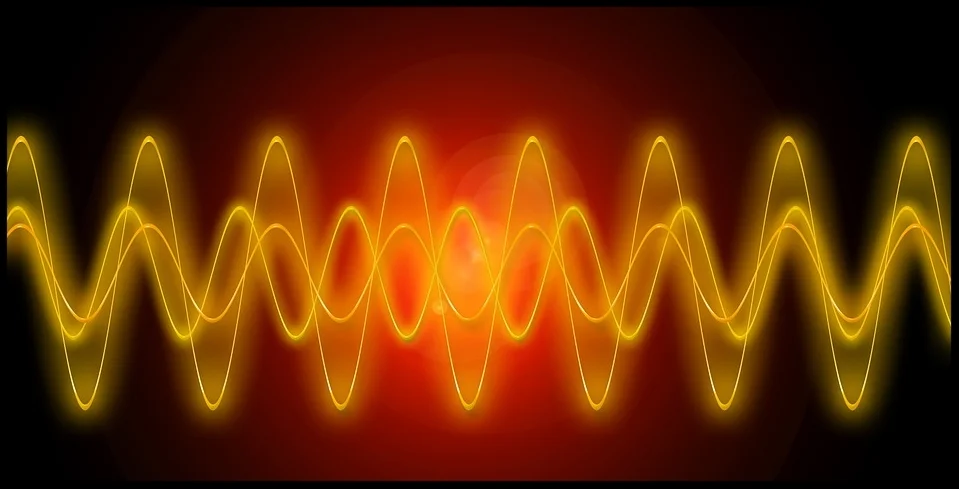
- Strings must vibrate to make a sound
- The frequency (speed) of the vibration creates the pitch - you will probably be familiar with concert A being 440Hz.
- The amplitude (how wide the string vibrates) and rigidity affect the sounds tone.
Softer strings will produce a warmer more mellow tone, and are more sensitive to play (this can be an advantage and disadvantage) and harder strings are brighter and can have more stability in tone.
A lighter gauge string (thinner in diameter) will vibrate more freely, making the sound easier to start, but also brighter and possibly more delicate sounds can be produced
A heavier gauge string (thicker in diameter) can be harder to start the sound and get vibration, but there can be more depth to the sound, with a big and solid tone.
With all this to consider, figuring out what sort of sound I wanted was not as easy as I thought. I like a big sound, a big mellow sound, but a sound that rings out when I need it to. I want good responsiveness but also stability and evenness. - So basically the best of both worlds. - Most importantly though warm and big.
Now, reading as many descriptions and reviews as I could with these criteria in mind. I found combining different types of strings can work well to get a particular sound optimised across the various registers. There are some sites that sell mixed sets . As far as I could find cello-strings.com sells the widest range of combos to suit different requirements, and by buying a set you get a much better price than buying them individually.
So I decided on the CS-131 set, combining Thomastik Tungsten Spirocore medium C and G and Pirastro Passione light A and medium D strings. Only the A and D strings have an option to select the gauge.
I personally found their service very good, the strings arrived within about a week (almost quicker than local post) and right away I got to replacing the old with the new.
Initially, I was quite taken aback as the A and D not only felt really soft, almost like an elastic band, but the sound was ultra mellow, you would have said there was a practice mute on. Of course having read the reviews and the instructions on the envelope, I knew that the sound would take a while to settle in, but I wasn't quite prepared for how extreme this settling process could be.
On the other end of the scale, the medium C was considerably lighter than the heavy gauge, again, I knew this was to be expected, but it's funny what you get used to. Then putting them side by side, the diameter of the new string was, to the eye, half that of my old string. To play, the string was much more sensitive than I was used to, and having more or less never played on anything but a heavy gauge string, I kept over playing it. I was turning the amp up to 11 ... but the knob doesn't go that far ... as it were.
As time has gone on, everything has evened out. The A has essentially lost most of it's real mellowness (after several weeks) but is still sweet and well balanced with the D. The only down side is that it's extremely sensitive to rosin build up, which gives it a harsh edge, so I find I need to be a bit more sensitive on the A and clean it often, the same to a lesser extent on the D.
Not surprisingly given the lighter gauge of the C, it is a lot easier to play, particularly in the higher positions, which in the past I tried to avoid, it was never a clean sound - just too hard to hold the strings down past 4th position. It does require more bow sensitivity, but I've gotten used to that eventually, better still I can get a good resonant sound without so much effort, meaning that playing softly I can be a bit freer with the bow, it could be easy to get a choked sound with the heavier string.
Finally, with this new balance of strings the overtones are amazing, At first it was disconcerting, particularly between the G and C, the other string would be vibrating so much I may as well have been playing both. As with everything it has settled a bit, but there is still an awesome resonance, I know how to control it a bit more at least now. At certain gigs I've had since the new strings went on I'd have comments on the volume of my playing... but I really wasn't hardly doing anything ... all those overtones resonating everywhere acting like a big amplifier through the wooden floors.
I guess the moral of all this is to try something new. Even when you think there' not much to be improved, the right balance of strings might surprise you. Every instrument is different and the strings that suit one instrument may not another. Think hard about the sound you want and where it might be lacking, but be prepared to make changes to your playing style to adapt to the new resonances and characteristics of your new strings. Also...be prepared to not necessarily get it right first time - I know in my case, next time I will be trying a medium weight A string, and possibly D, that it might be a bit less sensitive and have a bit more body and 'grunt'.
Don't forget to share your own experiences with trialing new strings in the comments below